Cyber Strategy, Architecture & GRC

This category explores the strategic layer of cyber security — where long‑term vision, technical architecture, and governance intersect. It covers how organisations design secure systems, build resilient architectures, align security with business goals, and navigate frameworks, risk, compliance, and regulatory expectations. From high‑level strategy to practical implementation, these articles break down the thinking, structures, and decision‑making that shape modern security programs.

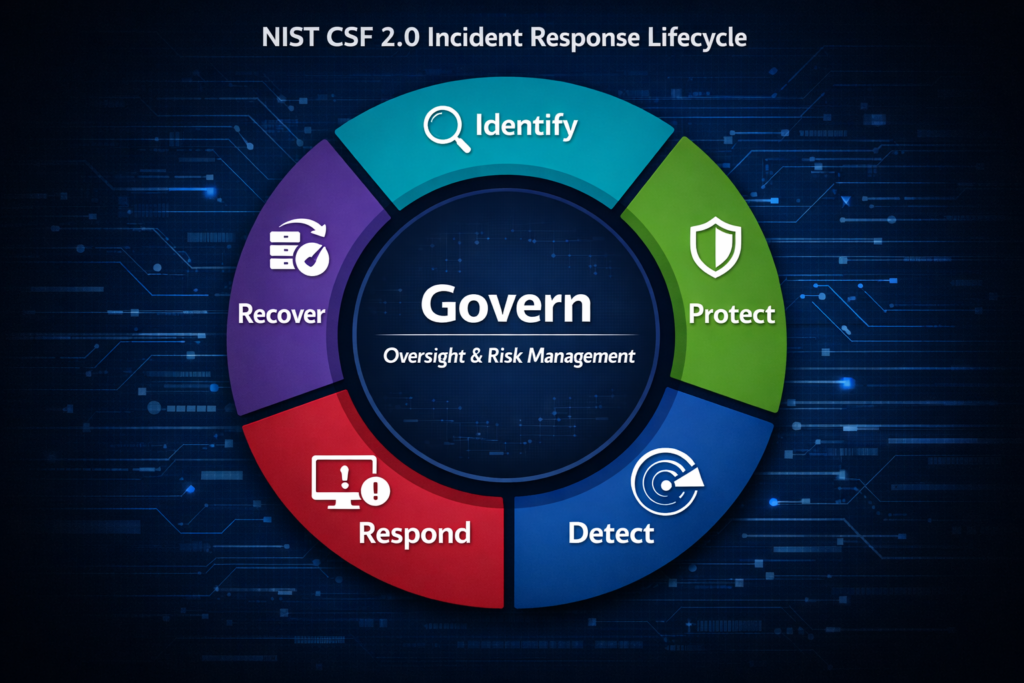
Circular NIST CSF 2.0 diagram with a dark‑navy “Govern” center and five equal outer segments labeled Identify, Protect, Detect, Respond, and Recover, each with its own color and icon on a cyber‑themed background.

The Evolution of Incident Response: Updating the Classic NIST IRP to the 2026 Framework

For years, cybersecurity teams followed the traditional NIST Incident Response Process: Preparation, Identification, Containment, Eradication, Recovery, and Lessons Learned. This model shaped how organisations built response capabilities and how students learned incident handling. The threat landscape has shifted dramatically, with cloud‑identity attacks defying linear phases, ransomware spreading before containment can begin, and supply‑chain compromises blurring […]

The Evolution of Incident Response: Updating the Classic NIST IRP to the 2026 Framework Read More »

Essential 8 Explained title graphic showing blue text and eight minimalist security icons representing each control.

The Essential 8 Explained Like You’re New to Cyber (But Want to Actually Understand It)

If you work in Australia, you’ve probably heard someone mention the ACSC Essential 8 in a meeting, usually right before everyone nods like they understand what’s going on. Spoiler: most people don’t. The Essential 8 is Australia’s baseline cyber security framework, a minimum and a voluntary baseline standard organisations can adopt to meet their cyber

The Essential 8 Explained Like You’re New to Cyber (But Want to Actually Understand It) Read More »