
PIR

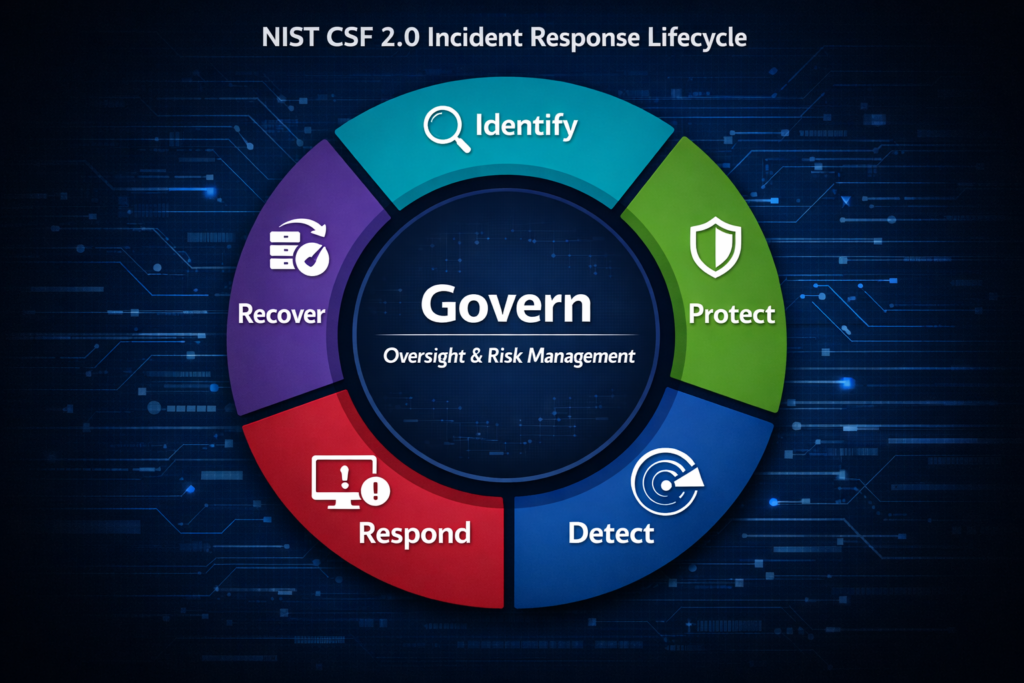
Circular NIST CSF 2.0 diagram with a dark‑navy “Govern” center and five equal outer segments labeled Identify, Protect, Detect, Respond, and Recover, each with its own color and icon on a cyber‑themed background.

Incident Response Series Round‑Up: IRP, PIR, Tabletop Exercises & NIST CSF 2.0

My interest in incident response started years ago during my first university course on the subject. It was the first time I’d seen how structured, disciplined, and genuinely powerful a well‑designed Incident Response Plan could be. That early exposure stayed with me. Later, when I began studying NIST CSF 2.0, I noticed something interesting: the […]

Incident Response Series Round‑Up: IRP, PIR, Tabletop Exercises & NIST CSF 2.0 Read More »

A printed Post‑Incident Review document with the Tayven Cyber Security logo resting on a laptop keyboard, showing a blue digital network map on the screen and a silver pen placed diagonally across the page.

How to Write a Post-Incident Review (PIR) Report (With Real-World Example)

A PIR isn’t just paperwork. It’s where the real learning happens. It’s the document that turns an incident into improvement. To show you what a mature, well‑structured PIR looks like in practice, here’s a full example based on a realistic MFA fatigue and OAuth compromise scenario.

How to Write a Post-Incident Review (PIR) Report (With Real-World Example) Read More »