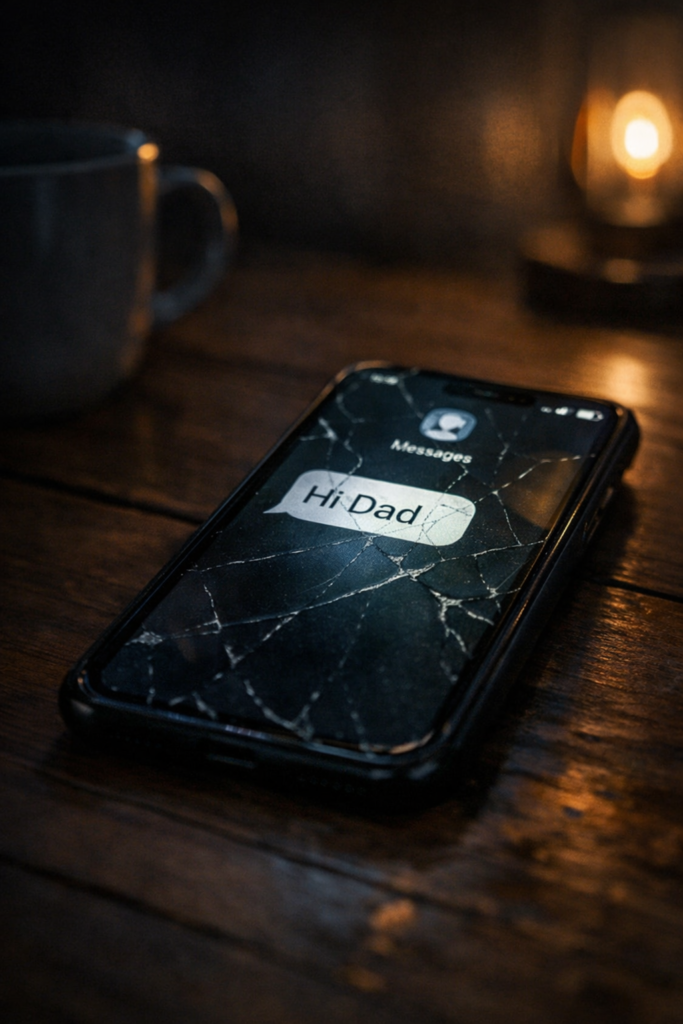
A late‑night buzz from an unknown number. A message that sounds exactly like your child. A believable accident, a broken phone, a new SIM card arriving at the exact moment you’re tired, distracted, and least likely to double‑check anything.
That’s why the “Hi Mum / Hi Dad” scam works. It doesn’t rely on hacking. It relies on timing, psychology, and catching you in the one moment where emotion overrides logic.
This guide shows you how to recognise the scam instantly, what to do, and what steps to take if you’ve already responded.
If you want the complete real‑world message sequence behind this scam, you can find it here: “Hi Dad, I Dropped My Phone”: How a Simple Text Stole $3600 And Why This Scam Is Exploding.
What This Scam Looks Like
It always starts with a simple, believable message:
“Hi dad my phone dropped into the toilet and had to get a new simcard so this will be my number for now.”
Or:
“Hi mum, I lost my phone. Message me here.”
The scammer pretends to be your child messaging from a temporary number. Once you reply, they quickly escalate into:
- urgent requests for help
- claims they can’t call or video chat
- requests for money
- requests for MFA codes
- emotional pressure (“please don’t tell anyone”)
It feels personal but it’s mass‑sent to thousands of numbers every day.
Why This Scam Works So Well
This scam succeeds because it targets human behaviour, not technology.
- It hits you at night when you’re tired
- It uses a believable family scenario
- It removes your ability to verify
- It creates urgency
- It hijacks legitimate MFA security
- It feels personal even though it’s mass‑sent
Scammers don’t need everyone to fall for it, they only need one person at the wrong moment.
Red Flags to Watch For
These are the signs that instantly reveal the scam.
1. Unknown number claiming to be a family member
This is the biggest red flag. Real family members don’t switch numbers without warning.
2. A believable accident
Broken phone. New SIM card. Lost device. These are scripted lines used across thousands of messages.
3. Refusal to call or video chat
This is the scammer’s most important move. They must prevent verification.
4. Urgent request for money
Always framed as temporary: “I’ll pay you back Saturday.” “I just need help right now.”
5. Requests for MFA codes
This is the danger point. If someone asks for a one‑time code, it is always a scam.
6. Emotional pressure
“I’m embarrassed.” “Please don’t tell anyone.” “I really need your help.”
These lines are designed to shut down critical thinking.
What To Do If You Receive a Message Like This
If you’ve already replied or engaged, don’t panic, these scams are designed to feel convincing. Pausing now is still the right move.
Here’s the exact playbook:
1. Pause
Scammers rely on urgency and panic.
2. Verify using the real number
Call or text the number you already have saved.
3. If they don’t answer, delay
There is always a way to verify later. Scammers rely on you acting immediately.
4. Ask a personal question
A nickname, a memory, or a detail only the real person would know and make sure it’s not a leading question like “Do you remember our dog’s name?” Ask something they must state, not confirm.
5. Never send money
No matter how convincing the story is.
6. Never share MFA codes
Banks will never ask for them. Family will never need them. Scammers always want them.
7. Block and report the number
This helps telcos shut down scam networks.
What To Do If You’ve Already Sent Money or Codes
1. Call your bank immediately
Ask them to freeze the card and dispute the transactions.
2. Change your online banking passwords
Even if you didn’t give them out.
3. Enable transaction alerts
So you see every charge instantly.
4. Contact IDCARE
Australia’s national identity support service. They can help assess what information was exposed and guide you through recovery steps.
5. Report the scam to Scamwatch
It helps track patterns and warn others.
Why We Need to Talk About This More
These scams work because they strike at the moments when we’re human. Tired, distracted, and trying to help someone we love. They’re engineered around emotion, not technology.
Cyber security isn’t about being perfect. It’s about recognising the moments when emotion overrides logic and having the clarity to pause before acting.
The more we talk about these scams, the fewer people fall for them.
References
- Scamwatch – Hi Mum / Hi Dad Scam Alerts
- ACMA – SMS Impersonation Scams
- Australian Banking Association – Scams
Further Reading: Cyber Security Awareness Series
If this incident taught me anything, it’s that cyber security isn’t about being perfect, it’s about being prepared.
- ATO Tax Scams: How to Spot One and What to Look Out For – Tax season is when Australians are most vulnerable to scams, and scammers know it.
- “Hi Dad, I Dropped My Phone”: How a Simple Text Stole $3600 And Why This Scam Is Exploding – A complete breakdown of the “Hi Dad / Hi Mum” text message scams
- The Toll Scam Text Message That Hit Me Inside the Tunnel– A practical guide to recognising and avoiding toll‑text message scams.
- Social Media Privacy Reset – A step-by-step guide to tightening your social media privacy settings.
- Think Before You Click – How to recognise suspicious links, messages, and online traps before you fall for them.
- Strong Authentication Made Simple – A clear breakdown of MFA, why it matters, and how to set it up properly.
- Everyday Device Protection – Simple settings and habits that harden your phone and laptop against common threats.
- Travel Cyber Security Tips – How to stay secure on public Wi-Fi, in airports, hotels, and while exploring abroad.
- Introducing Everyday Cyber Security – The origin of the series and the philosophy behind making cyber security accessible.